TEL: +86-750-6896682 Email:info@goodtissue.com

 English
Views: 0 Author: Site Editor Publish Time: 2026-07-29 Origin: Site


TL;DR:
There are several distinct kinds of tissue paper — from facial tissue and paper towels to napkins and toilet paper — each designed for a specific purpose. Understanding the differences helps households and businesses choose the right product for hygiene, efficiency, and cost savings. Yafeng Paper Industry manufactures a full range of high-quality tissue products for both personal and commercial use.
Walk into any supply closet or grocery aisle, and you'll find a wall of paper products that all look vaguely similar — yet perform very differently. Picking the wrong one doesn't just cause frustration. For businesses especially, it can mean wasted budget, hygiene gaps, and unnecessary waste.
This guide breaks down the main kinds of tissue paper, how they compare, and what to look for when buying in bulk for commercial settings. By the end, you'll know exactly which product fits which situation — and why quality matters more than price alone.
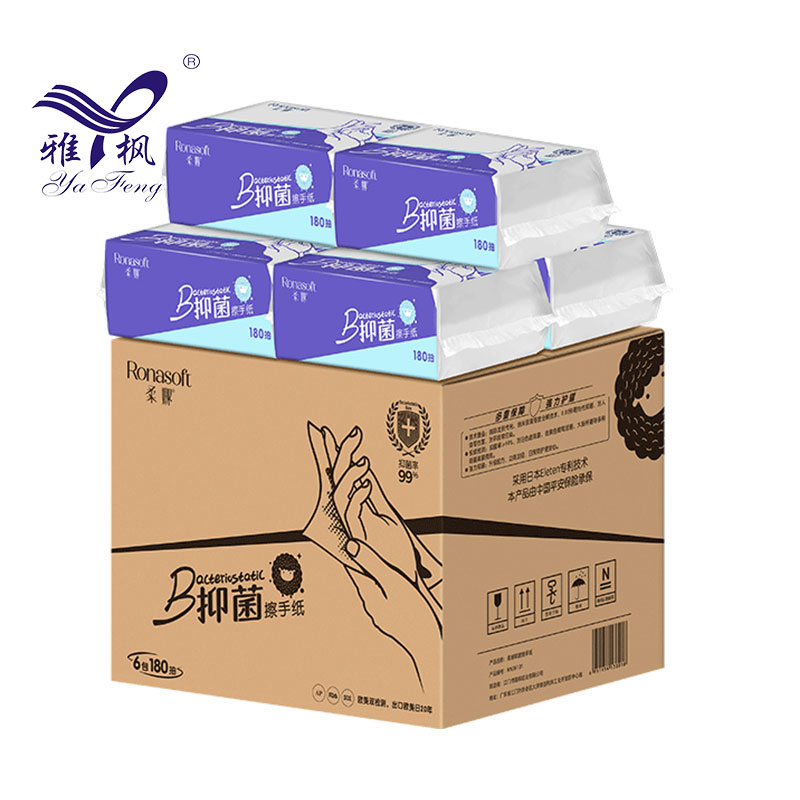
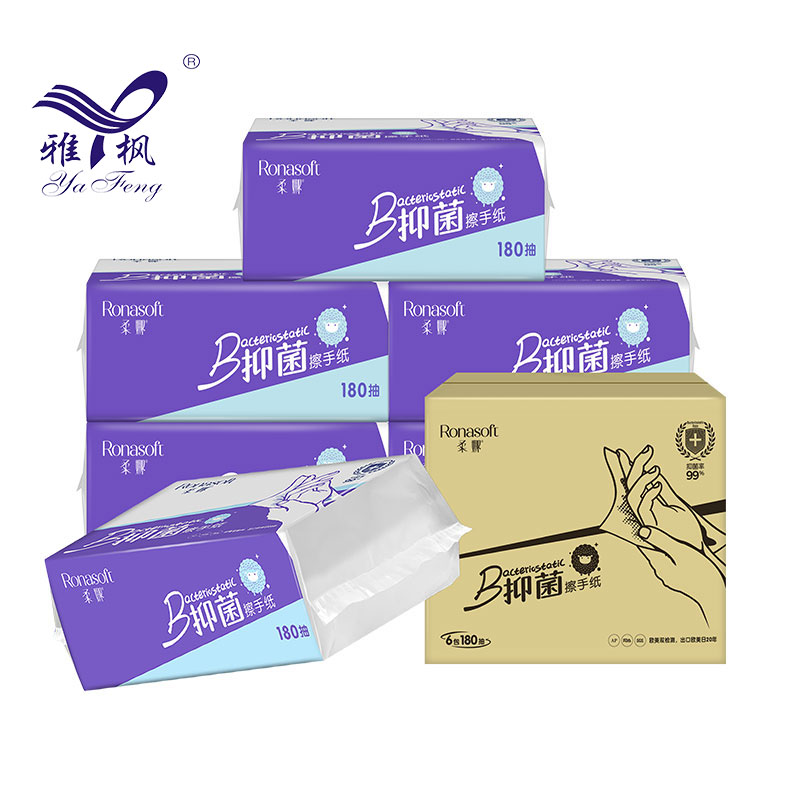
Tissue paper is a broad category. What separates one product from another comes down to three factors: fiber composition, ply count, and intended use. Most tissue products are made from virgin wood pulp, recycled fiber, or a blend of both. Virgin wood pulp — like what Yafeng Paper Industry uses across its entire product line — delivers superior softness, strength, and absorbency compared to recycled alternatives.
Ply count matters too. A 2-ply sheet is thicker and more durable than a single-ply sheet, while 4-ply products offer maximum softness for premium applications. Once you understand these fundamentals, comparing product types becomes straightforward.
The table below outlines the most common tissue products, their primary characteristics, and their best use cases.
Product Type | Typical Ply | Key Feature | Best For |
|---|---|---|---|
Facial Tissue (Box) | 2–4 ply | Soft, gentle on skin | Personal skincare, bedside, office desks |
Facial Tissue (Soft Pack) | 2–4 ply | Portable, compact | Travel, handbags, on-the-go use |
Hand Towel Paper | 1–2 ply | Absorbent, quick-dry | Restrooms, kitchens, commercial facilities |
Kitchen Paper | 2 ply | Strong wet strength | Cleaning spills, food prep |
Napkin Tissue | 1–2 ply | Folded, neat presentation | Dining, foodservice, events |
Toilet Paper | 2–4 ply | Soft, dissolvable | Bathrooms, hotels, residential |
Pocket Tissue | 2–3 ply | Small, sealed pack | Outdoor use, travel, personal hygiene |
Each product type serves a distinct function, and mixing them up — say, using facial tissue as a hand towel in a busy restroom — leads to fast depletion, higher costs, and poor hygiene outcomes.


This is one of the most common sourcing questions buyers ask. The distinction between paper towel vs tissue paper comes down to durability and absorbency. Paper towels are engineered to handle moisture — they're thicker, more structurally resilient when wet, and designed for drying and cleaning tasks. Facial tissue, on the other hand, prioritizes softness and gentleness for contact with sensitive skin like the face or eyes.
Using facial tissue as a substitute for paper towels in a kitchen or commercial restroom is inefficient. It breaks down too quickly under moisture, requiring multiple sheets where one proper hand towel would do the job. The reverse is also true — paper towels feel rough against facial skin, which is why the two products exist as separate categories.
For households managing both personal care and household cleaning, it's worth stocking both. For businesses, the distinction becomes even more financially significant.
Commercial buyers face different demands than individual consumers. Volume, hygiene compliance, dispenser compatibility, and total cost per use all factor into the decision. Here's what matters most:
Absorbency and ply count: Higher ply means fewer sheets used per hand-dry cycle, which can offset a higher unit price.
Dispenser compatibility: Folded hand towels (Z-fold, C-fold, multifold) must match the dispenser format installed in restrooms.
Bacteriostatic properties: For foodservice and healthcare environments, tissue with built-in bacteriostatic technology — like Yafeng Paper Industry's Ronasoft Bacteriostatic Tissue series — adds a meaningful layer of hygiene protection.
Certifications: FSC-certified products confirm responsible sourcing. Yafeng Paper Industry holds FSC certification, ensuring that all virgin wood pulp is traceable to sustainably managed forests.
OEM and bulk customization: Businesses with branded environments — hotels, restaurant chains, corporate offices — often benefit from custom-labeled tissue products. Yafeng offers full OEM/ODM services to accommodate these requirements.
Choosing the right paper towels for commercial use is less about finding the cheapest option and more about calculating cost per use. A lower-priced, thin product that requires three or four sheets per dry cycle costs more over time than a premium 2-ply towel used once.
Tissue quality affects more than comfort. In commercial settings, low-quality tissue leads to more frequent restocking, higher maintenance demands, and a worse impression on customers and employees. Hotels that provide 4-ply facial tissue in guest rooms communicate care and quality. Restaurants that stock sturdy napkins reduce the need for guests to reach for second and third sheets.
Yafeng Paper Industry, established in 2001, operates a 30,000-square-meter manufacturing facility in Jiangmen, China, and exports products to Europe, Southeast Asia, North America, South America, and Oceania. The company's products are made from 100% virgin wood pulp, with no recycled fiber — a commitment that translates directly into better tactile quality and higher absorbency for the end user.
Not all manufacturers offer the same level of product consistency, customization, or quality control. When evaluating suppliers, ask about:
Raw material sourcing — Is virgin wood pulp used, or recycled fiber?
Certifications — Is the product FSC-certified?
OEM/ODM capability — Can the supplier customize packaging and branding?
Export experience — Does the supplier have established logistics for your region?
Product range — Can one supplier meet multiple needs (facial tissue, hand towels, kitchen paper)?
A manufacturer like Yafeng Paper Industry, with over 20 years of export experience and a full product catalog, simplifies procurement by consolidating multiple tissue categories under one supplier relationship.
The most common types are hand towel paper, toilet paper, facial tissue, napkins, and kitchen paper. Each serves a different function. Hand towel paper is used for drying hands in restrooms. Toilet paper is bathroom-specific. Facial tissue suits personal care areas. Napkins are used in foodservice. Kitchen paper handles cleaning and spill absorption in food preparation areas.
No. Paper towels and tissue paper are related but distinct products. Paper towels are designed for absorbency and durability under moisture — ideal for drying hands and cleaning surfaces. Facial tissue is engineered for softness and skin-contact applications. Using them interchangeably leads to higher costs and lower performance.
For most commercial restrooms, 2-ply hand towels offer the best balance of absorbency and cost efficiency. In premium environments such as hotels or executive offices, 2-ply or higher-quality options reduce overall consumption and project a better brand image.
Bacteriostatic tissue is treated with agents that inhibit bacterial growth on the surface of the paper. Yafeng Paper Industry's Ronasoft Bacteriostatic Tissue series uses dry bacteriostatic technology, making it especially suitable for high-touch environments like restrooms, kitchens, and healthcare facilities.
Yes. Yafeng Paper Industry offers full OEM and ODM services, allowing businesses to customize packaging, branding, sheet count, ply count, and product format. This is particularly useful for hotel groups, restaurant chains, and corporate procurement teams that want branded tissue products.


